The Karoo Heartland
Marketing Association
The Karoo, the central high-plateau of South Africa, is
surrounded by the mighty mountain chains of the escarpment.
The rain, brought by the humid sea winds, goes down over the weather side of
the mountain slopes, so that the lee side stays basically dry.
Therefore, the endless grassland of the Karoo gets as little as 400 mm of
rain annually, which falls mainly in summer. The winter months are almost
completely dry. Precipitation gets even lighter towards the north-west. In
the upper Karoo it rains on average less than 200 mm per year, which makes it
an arid, semi-desert zone (meaning that precipitation is less than the rate of
evaporation).
Due to the average altitude of 1200 m on the central high-plateau,
temperatures in summer are usually bearable, although the thermometer reading
can sometimes go over 35 degrees Celsius. Towards the north-west, in the
direction of the Kalahari basin, due to the lower elevation, temperature are
even higher. (100m difference in altitude corresponds to 1 degree temperature
difference.) In Upington, for example, at the lower Orange River, one can
expect temperatures of around 40 degrees in summer.
The best time to travel in the Karoo is between May and September. During the
day, it is pleasantly warm and sunny (20 - 25 degrees C), and at night it gets
cool enough for a good sleep.
The village Sutherland, founded in 1857, lies nearly 1 500 metres above sea
level and claims to be the coldest inhabited place in South Africa. After
extensive research it was selected as the ideal site for an astronomical
observatory - the largest of its four main telescopes has a mirror 1,9m in
diameter, weighing 1 600kg! The clarity of the atmosphere makes this the ideal
place for scientific observations of the stellar system.
Starting at bedrock the story of the Great Karoo goes back 270 million years
to when the central part of' South Africa was a low-lying basin ringed by high
lying land and covered by a thick mantle of slow-moving ice. With the coming
of a warmer, wetter climate an enormously long period of alternating low and
high rainfall seasons settled over South Africa.
This period saw the development of a luxurious plant life and the appearance
of now long-extinct animals. With the passing of millions of years sand, mud
and clay, often containing the fossil remains of animals and plants, were
pressured and hardened into a series of rock layers, or strata, thousands of
metres thick. The countryside formed from these deposits is today known in the
Cape as The Karoo, while the series as a whole is known to geologists as the
Karoo System.
This, in turn, is divided into several series that are, from oldest to
youngest, the Dwyka, the Ecca, the Beaufort and the Stormberg series.
On the left is a photo of a Diictodon fossil (reptile-like mammal) found in
the Karoo National Park. This fossil is approximately 240 million years old.
(Dr F Durand)
It is from the beds of the younger geological series that have come the
fascinating fossils, which have led to the Karoo's recognition as one of the
biggest and most important fossil deposits in the world.
Painstaking pre-historical detective work done by such famed fossickers as the
late Dr Robert Broom has vividly repopulated the dim distant Karoo with the
grim and grotesque monsters which lumbered, grazed and fought in its primeval
marshlands and rivers; animals such as the Pareiasaurus, a fearsome-looking
cross between a hippopotamus and a crocodile which was preyed upon by the even
more hideous titanosuchids, therocephalians and the smaller gorgonopsians.
It is strange today to think of the Karoo's lonely landscape echoing with the
shrieks and bellows of battling dinosaurs, stranger to realise that while
these scaly monsters were fighting for supremacy a new type of animal, no
larger than a rat, had appeared on the Karoo scene to announce the beginning
of the first true mammals.
The Karoo's evolutionary scenario had a dramatic curtain when the semi-desert
habitat experienced cataclysmic volcanic eruptions, which poured vast rivers
of molten lava over the countryside, destroying all animal and plant life. At
the end of this volcanic activity a period of erosion started which gradually
stripped away land surfaces to expose the entire Karoo succession - a
petrified showcase of entombed plants and animals - in a process that is still
going on.
For the visitor this area offers a treasure chest of information. Various tour
operators specialise in fossil tours with their contact details listed here.
Addo Elephant Park
Addo is 72 km north of Port Elizabeth near the Zuurberg Range in the Sunday
River Valley area. It is located in the dense, indigenous bush country.
The Addo Elephant National Park was proclaimed in 1931 to preserve the last
survivors of once numerous herds of elephants in the eastern cape which were
hunted almost to extinction.
The park is 12,126 ha of gently undulating valley Bushveld and is fenced. The
elephants are gregarious, living in family groups led by a cow, and the
dominant bull of the reserve does most of the breeding. For many years this
bull was called Hapoor, whose ear had been nicked by a bullet. He was finally
deposed in 1968, broke out of the reserve and was shot. His head is mounted on
the wall of the park restaurant.
Elephants, buffalos, also East African black rhinoceros, red hartebeest, kudu,
bushbuck, cape grysbok, duiker, Burchells zebra, black-backed jackal,
bat-eared fox, warthog, ostrich, small spotted genet, springhare, suricate,
yellow mongoose, tortoises and vervet monkey are found in the Park.
There are also more than 150 bird species ranging from ostriches, to raptors,
and waterfowl.
To get to the Park from Port Elizabeth drive east to the Swartkops River, just
outside the city and then turn left for the 29-km drive to Addo. Continue
along the road to Corney to reach the National Park, 73 km from Port Elizabeth
in the Sundays River valley and the Zuurberg mountain range. The access road
from the main road is 4km and is tarred as far as the restcamp. The road
within the restcamp is tarred but all other internal roads are gravel.
All accommodation is serviced daily and provides bedding, towels and soap. Six
bed guest cottages each with two bedrooms, bathroom en suite, one with bath
one with shower and a fully equipped kitchen. Four bed cottage include one
bedroom, bathroom, and an open plan partially equipped kitchen. Bungalows each
with two single beds and a double sleeper, also a two-bed bungalow with
bathroom.Two bed bungalows with bathroom and communal kitchen facilities.
Camping and caravan sites maximum six persons to one caravan with a side tent
and one vehicle.
For nature-lovers and botanists there is the four-hour Spekboom Trail, which
lies inside a fenced-off botanical garden.
More Information on their Website
Telephone : +27 (0)42 233 0556/7
Valley of Desolation
Sheer cliffs and precariously balanced columns of Dolerite rise 120 metres
from the valley floor, against the timeless backdrop of the vast plains of the
Camdeboo. This is the product of volcanic and erosive forces of nature over
100 million years.
This breathtaking site is a short 14 km drive from the town. Any visitor to
the Reserve will be surprised to discover the diversity of fauna and flora.
There are over 220 recorded species of birdlife, 336 plants and 43 mammals.
Catch a glimpse of the endangered Cape Mountain Zebra, plenty of Kudu,
Buffalo, the majestic Black Eagle and the Kori Bustard, the heaviest flying
bird in the world.
You have a choice of scenic picnic sites in the Reserve, and for those a
little more energetic, there are three walking trails which range from 1 hour
in duration to overnight hikes - be sure to bring your camera!
Karoo National Park
The Karoo National Park is situated close to the highway between Cape Town and
the hinterland, approximately 1000km south of Johannesburg and 500 km north of
Cape Town. The Great Karoo is a vast and unforgiving landscape in which the
Karoo National Park is dominated by the lofty Nuweveld mountains and rolling
plains. Towards late afternoon the great unyielding canopy slowly softens its
fierceness and from pastel shades of pink and blue the colors deepen, setting
the endless Karoo canvas ablaze with glorious hues of orange and red.
The park has 61 species of mammals the most common of which are classic and
bat-eared fox and rhino. The Karoo National Parks has a wide variety of
endemic wildlife many species of which have been located to their former
ranges such as black rhino and buffaloes, as well as Cape mountain zebra and
over 20 breeding pairs of black eagle.
Other attractions in the Park are a swimming pool, 2 information centres, game
viewing, bird hide at the dam and 2 nature trails. The Springbok hiking trail
which is a 3 day/2 night trail for a max of 12 persons and the Karoo Fossil
Braille Trail and Karoo 4x4 trail for max of 8 persons are located in the
Park.
The restcamp is 10 km from the town of Beaufort West and the Park is close to
the N1 highway between Cape Town and the hinterland. By air - there is an
airport 10 km from Beaufort West and car hire is available in Beaufort West.
All internal roads are tarred with the exception of the 4x4 Trail and access
roads to the Mountain View Rest camp.
More Information on their Website
Telephone : +27 (0)23 415 2828/9
Mountain Zebra National Park
The Mountain Zebra National Park, about 30 km from the small town of Cradock,
is on the northern slopes of the 2000m high Bankberg and has magnificent views
over the Karoo. The craggy heights of Mountain Zebra National Park embrace
rolling plains and deep valleys and has become an entrancing preserve for the
Cape mountain zebra. The proclamation of the Park in 1937 saved these animals
from extinction and their current population is just 130.
The best time to visit is March to May. It is the most comfortable for
visiting the park, summers are warm and winter nights are cold. Rainfall
averages 390mm per annum and there is regular snowfall on high lying areas.
It's a small Park protecting one of the rarest animals in the world - the
mountain zebra whose current population stands at 130. There are many antelope
species, eland, black wildebeest, red hartebeest, and gemsbok, mountain reed
buck, and grey rhebok frequent the higher areas, whilst caracal occupy the
niche of primary predator. There are three species of zebra - Grevy's the
biggest, Burchell's the most numerous, and the Cape mountain zebra the
smallest and one of the rarest living mammals.
There are a swimming pool, picnic and braai areas, game viewing, horse riding
and the Mountain Zebra hiking trail a 3 day/2 night trek for max 12 persons.
More Information on their Website
Telephone : +27 (0)48 881 2427
Kgalagadi Transfrontier Park
The park lies in the triangle segment of South Africa between Namibia and
Botswana, covering an area of 959,103 hectares with mile upon mile of rolling
rust red sand dunes, solitary trees and scattered grasses. For lovers of the
ambience of untamed Africa this hauntingly beautifully region has a special
appeal all of its own and the park is named after the gemsbok. If you yearn to
experience the unspoilt beauty of Africa, to hear the nocturnal calls of wild
animals stalking their prey, and be in at the kill with Kalahari lions, then
this national park is the perfect holiday destination.
The Park is open throughout the year, but the best times for game viewing are
February through May.
The red dunes and scrub fade into infinity and herds of gemsbok, springbok,
eland and blue wildebeest follow the seasons. Imposing camel thorn trees
provide shade for huge lion and vantage points for leopard, and many raptors,
cheetah, spotted hyena, black-backed jackal.
Although the countryside is semi-desert it is richer than it appears and
supports large populations of birds.
The Park is situated 358 km from Upington in the far northern Cape and 904 km
from Johannesburg.
There is no border post at Mata Mata and Namibia can be entered via
Aroab/Rietfontein. Access roads in the Park have gravel surfaces. Travel time
from the entrance gate at Twee Rivieren to Nossob restcamp is 3.5 hours and to
Mata Mata 2.5 hours.
There are three rest camps. Twee Rivieren is at the southern gate of the park
There is a 6 bed family cottage with bathroom and air-con and fully equipped
kitchen. Also 3 and 4 bed cottages with bathroom, air-con and fully equipped
kitchen and bungalows with 2 single bed, bathroom, air-con and fully equipped
kitchen. there is also a swimmimg pool and information centre at the rest
camp.
Nossob lies on the Botswana border north of the entrance gate and consists of
six-bed family cottages with bathrooms and kitchen, three bed bungalows with
bathroom and kitchen and three bed huts with shared ablution and kitchen
facilities.
Matamata is situated on the Namibian border to the north west of the entrance
gate and comprises a six bed family cottage with bathroom and kitchen and
three bed chalets with communal ablution and kitchen facilities.
Camping and caravan facilities are found at all 3 rest camps.
More Information on their Website
Telephone : +27 (0)54 561 2000
The Vaalbos National Park
The Vaalbos National Park is an extraordinary 23,000 ha area along the Vaal
River in the former heart of the alluvial diamond diggings near Kimberley. A
tourist route, built with material from the diamond diggings using local
labor, winds through the park, exposing visitors to all facets of it's three
different ecosystems as they merge together as one.
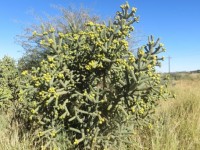
The name Vaalbos originates from the vaalbos (camphor bush) a prominent plant
species in the park. Rainfall during summer could vary between 300m and 700mm
per annum, winters are cold with temperatures as high as 44c.
Wildlife includes black rhino, white rhino, buffalo, giraffe, eland, red
hartebeest and tsessebe.
Birdwatchers come to see the large raptors and the rare yellow-breasted form
of the crimson-breasted shrike among others.
The park gets its rainfall mainly during summer, could vary between 300 mm and
700 mm per annum. Winters are cold with temperatures as low as 4 degrees C.
Summer temperatures may be as high as 44 degrees C.
The park is a transitional vegetation zone where typical Karoo, Kalahari
thornveld and grassveld meet.
At Block Dam picnic sites 17 km from the gate 10 barbecue complete with
ablution facilities and hide created at a waterhole. River picnic sites are
situated on the banks of the Vaal River some 2km from the gate with 20
barbecues.
The Great Karoo, an area in excess of 400 000 square kilometers was,
approximately 250 million years ago, a vast inland sea. As the world's climate
gradually changed from cold to hot the water evaporated leaving a swamp where
reptiles and amphibians prospered. Read more about it here.
In recent history, less than two hundred years ago large herds of antelope and
zebras roamed the grass flats. The Hottentots and Bushmen, the last Stone Age
people, shared the “Place of Great Dryness”. They differed basically in their
cultures and lifestyles: the Hottentots herding their sheep and cattle in the
age-old pastoral pattern and the Bushmen following their traditional nomadic
pursuits of hunting and feasting. With the occupation of the area by stock
farmers the sheep gradually replaced the game and the grass receded along with
the changed grazing and weather patterns.
During the Anglo Boer War of 1899-1902 three Republican Commandos, reinforced
by the rebels from the Cape Colony, conducted widespread operations throughout
the Karoo.
Countless skirmishes took place, with the Calvinia Magisterial district
contributing a significant number of fighters to the Republican cause.
Fought both conventionally and as a guerilla struggle over the Karoo's vast
expanses, it was a bloody war of attrition wherein both sides used developing
technologies to their advantage.
Numerous abandoned blockhouses can still be seen at strategic locations in the
Great Karoo with a prime example at the Geelbeks River 12 kilometres outside
Laingsburg.
Currently sheep farming is the economic backbone of the Karoo with other forms
of agriculture taking place in areas where irrigation is possible. Lately game
farms and tourism to this fascinating area is also making an impact.
Various tour operators specialises in the area.
When the first trekboers and hunters pushed their ox wagons over the mountain
barriers that sweep from the Cedarberg, the Swartruggens, the Witteberge and
the Great Swartberg in a defending shield they came into close contact with
the oldest surviving inhabitants of Southern Africa, the Hottentots and the
wary Bushmen.
These, the last Stone Age peoples, shared the “Place of Great Dryness”. They
differed basically in their cultures and lifestyles: the Hottentots herding
their sheep and cattle in the age-old pastoral pattern and the Bushmen
following their traditional nomadic pursuits of hunting and feasting. European
contact with the Hottentots went back to the early days of Cape settlement and
the Karoo clansmen soon responded to brandy and tobacco to become herdsmen and
servants; the Bushmen initially retreated into the fastnesses of their hunting
grounds until the uneasy peace was broken and a savage if sporadic war was
waged to exterminate them. For close on a century the tiny Bushmen were
hunted and harried until, decimated and broken, they retreated into the sandy
wastes of the Kalahari to find their last refuge. In the Great Karoo where
they had run down the fat buck and painted symbolic dance and chase scenes in
their rock shelters their age-old lands became the domain of the trekboers,
who wandered with their flocks in search of water and grazing.
From the middle of the eighteenth century the vast, untamed plains of the
Karoo drew increasing numbers of adventurous stockmen who chafed at the
restrictions of the settled areas, sturdily independent men with hands made to
shape frontiers. They had to be sturdy; the Great Karoo is no place for
weaklings. Many of the travellers who braved its iron bound plains commented
with obvious feeling on the hardships and privations of the Karoo and the type
of men who defied them.
The Swedish botanist and naturalist Dr Carl Peter Thunberg made three journeys
into the interior of the Cape between 1772 and 1774, the first of a succession
of scientific inquirers who travelled the Great Karoo. He found the “Carrow”
had “a burning hot climate where not a drop of rain falls for the space of
eight months at least’. It was so hot that “the eye is affected by a tremulous
motion in the air, just as though one were looking at a flame”.The heat and
the monotony: these are the two aspects of the Karoo that recur throughout the
writing of the early travellers. When Thomas Pringle, the poet, visited the
Great Karoo no rain had fallen for nearly a year. He wrote: “Not a vestage of
green pasturage was to be descried over the surface of the immense monotonous
landscape; and the low heath-like shrubbery, apparently as sapless as a
worn-out broom, was the only thing our cattle had to browse on. No wild game
was to be seen: all had fled apparently to some more hospitable region. Not
even a wandering ostrich or bird of prey appeared to break the death-like
stillness of the waste”. George Thompson, a Cape Town merchant, echoed him. He
found the Karoo around Beaufort West “dismally parched up” and concluded the
region was “only fit for human residence during a few weeks in the year, after
the fall of the periodical, or rather the occasional rains, for sometimes more
than one season intervenes without them”. Despite Thompson's gloomy conclusion
tenacious boers were living the year round in the area. That their life was a
hard one is borne out by the visit of the botanist William Burchell to the
home of a semi-nomadic boer during his epic journey between 1811 and 1815.
Burchell accompanied the boer to his “miserable hut” to buy some sheep. “His
only food was mutton, without bread or any kind of vegetables. His sheep were
numerous and thriving, though they fed on nothing but bushes: of large cattle
he had none, as the land of the Karro and the Roggeveld does not produce the
grassy pasture proper for cows and oxen,” he noted. “Our visitor's place in
the scale of civilisation would he nearly at the bottom, if even it should not
be below zero.” Things were little different 20 years later when the
naturalist Andrew Steedman travelled the Karoo and put up at the farm of “a
Boor named Boonartie” in the Nuweveld area. The family had already been driven
from their previous land by the depredations of Bushmen who had plundered
their farm, driven off stock and attempted to shoot them with their poisoned
arrows. Now they had to contend with predators, chilling cold and birds of
prey such as the bearded vulture, all of which combined to reduce their
flocks. The Boonarties were hospitable people even though Steedman found
“their house was the picture of misery, the thatch of one room having
completely disappeared, while the wind and rain penetrated through the
shattered and dilapidated roof of the other to such a degree that it was with
difficulty candles could be kept burning on the table”. A nineteenth century
traveller, G. A. Farini, crossed the Great Karoo by train at a time when no
rain had fallen for two years. He thought the sun was trying to make up for
lost time in the 'most terrible, arid, parched-up, kiln-dried, scorched,
baked, burnt, and Godforsaken district' it had ever shone upon. When Farini
was told that there were other districts which had known no rainfall for up to
twelve years he remarked, 'Ah! I felt sure, all the time, that Hell could not
be a great way off this place.'
It seemed incredible to him that 'the Great Karoo can ever be other than it is
now -an apparently hopeless desert'.
Lord Randolph Churchill, who also followed the line of rail, had a more
discerning eye and regarded the Karoo as 'far more hospitable and nourishing
for livestock than the uninstructed tourist would imagine.'
Lord Randolph was right. Sheep and goats are the wealth of the Karoo and the
multiplication of their numbers on the plains is the basis of most agriculture
and much commerce in the region. The meat, fleeces, hair and hides of these
animals provided the fledgling railways with much of their goods trade in the
latter years of the nineteenth century when gangs of British navvies were
taking the rail across the plains to the diamond fields of Kimberley.
Fossil Reptiles of the Great Karoo
Starting at bedrock the story of the Great Karoo goes back 270 million years
to when the central part of' South Africa was a low-lying basin ringed by high
lying land and covered by a thick mantle of slow-moving ice. With the coming
of a warmer, wetter climate an enormously long period of alternating low and
high rainfall seasons settled over South Africa.
This period saw the development of a luxurious plant life and the appearance
of now long-extinct animals. With the passing of millions of years sand, mud
and clay, often containing the fossil remains of animals and plants, were
pressured and hardened into a series of rock layers, or strata, thousands of
metres thick. The countryside formed from these deposits is today known in the
Cape as The Karoo, while the series as a whole is known to geologists as the
Karoo System.
This, in turn, is divided into several series that are, from oldest to
youngest, the Dwyka, the Ecca, the Beaufort and the Stormberg series.
On the left is a photo of a Diictodon fossil (reptile-like mammal) found in
the Karoo National Park. This fossil is approximately 240 million years old.
(Dr F Durand)
It is from the beds of the younger geological series that have come the
fascinating fossils, which have led to the Karoo's recognition as one of the
biggest and most important fossil deposits in the world.
Painstaking pre-historical detective work done by such famed fossickers as the
late Dr Robert Broom has vividly repopulated the dim distant Karoo with the
grim and grotesque monsters which lumbered, grazed and fought in its primeval
marshlands and rivers; animals such as the Pareiasaurus, a fearsome-looking
cross between a hippopotamus and a crocodile which was preyed upon by the even
more hideous titanosuchids, therocephalians and the smaller gorgonopsians.
It is strange today to think of the Karoo's lonely landscape echoing with the
shrieks and bellows of battling dinosaurs, stranger to realise that while
these scaly monsters were fighting for supremacy a new type of animal, no
larger than a rat, had appeared on the Karoo scene to announce the beginning
of the first true mammals.
The Karoo's evolutionary scenario had a dramatic curtain when the semi-desert
habitat experienced cataclysmic volcanic eruptions, which poured vast rivers
of molten lava over the countryside, destroying all animal and plant life. At
the end of this volcanic activity a period of erosion started which gradually
stripped away land surfaces to expose the entire Karoo succession - a
petrified showcase of entombed plants and animals - in a process that is still
going on.
For the visitor this area offers a treasure chest of information. Various tour
operators specialise in fossil tours with their contact details listed here.
Languages
There are 11 official languages. The two major Black languages are Zulu and
Xhosa.
English is the official language and is taught throughout the education
system, though Afrikaans is still the lingua franca amongst many of the
people. The main ethnic languages fall into the Bantu and Khoisan language
groups. Most black South Africans will also speak one or more African
languages, whilst many white South Africans (especially those in the
commercial farming communities) regard Afrikaans their first language.
The English speaking tourist will experience no difficulties, neither the
Dutch nor Flemish speakers. Most of the larger institutions and operators
cater for German, French and Japanese groups.
Top
Documents
All visitors must have a passport, which is valid for at least six months
after they are due to leave, and an onward ticket of some sort. In practice,
the second requirement is rarely even considered if you look neat, respectable
and fairly affluent. Travelers from certain countries need a visa. Apply for
multiple entry visas should you wish to visit neighboring countries.
Top
Accommodation
South Africa caters for a wide spectrum of visitors - from 5-star hotels to
self-catering cottages. Guest houses and B&B's have become increasingly
popular with visitors mainly because of lower rates and excellent service.
National Parks and Game Reserves as well as the private reserves have their
own accommodation facilities. Click here to see what is on offer in the Great
Karoo.
Top
Banking
Automated teller machines (ATM's) are situated in all towns and shopping
centres and are available 24-hours a day.
Top
Currency
The monetary unit is the Rand (R) which equals 100 cents. (International
symbol is ZAR). Bank note denominations are R200, R100, R50, R20, and R10.
The best system is always to have some cash South African Rand whilst
conserving these by using credit cards where you can. Normal banking hours are
08.30-15.30 weekdays and 08.30-12.00 on Saturdays, depending upon the town.
Banks will cash traveler's cheques or give cash advances on credit cards,
though the clearance required for a cash advance may take 30 minutes or so. In
the remoter areas cash is essential. Wherever you are, petrol stations always
require cash.
Top
Budgeting
Few, if any, of South Africa's attractions are intrinsically expensive. Many
are protected in national parks, which are very reasonably priced. Private
lodges, and operators who run trips to the remote areas of the country can be
more expensive.
In all these cases you are paying for some combination of high levels of
luxury, the skills of first-class guides, and the logistics of finding comfort
in such remote places. By African standards, the prices of South Africa's
private lodges and safari operations remain reasonable. Much better value than
equivalent operations in any other African country. This is partially because
the economy is tied to the low-value South African Rand.
If you eat in restaurants, lunch will cost around R30. Dinner, with perhaps a
few beers or half a bottle of South African wine, will be nearer R80 per
person. National park fees are now largely included in the accommodation and
camping prices. The main additional expense is petrol if you are driving, for
which assume about R4 per liter. The roads are usually open and easy, so
expect to cruise at very economic speeds.
Top
How to take your money
South African Rand are essential for buying petrol and small items, whilst
most hotels, restaurants and larger shops accept credit cards. Many travelers
take most of their money as traveler's cheques (sterling or US dollars).
Banks in the cities will cash any travelers' cheques, but American Express,
Visa, MasterCard and Diners are well recognised, and prompt replacements are
issued if cheques are stolen. Drawing money at a bank via credit cards is
easy, but it will take a few minutes longer than changing travelers' cheques.
Top
Clothing
Most of your days you will want light, loose-fitting clothing. Cotton (or a
cotton-rich mix) is cooler and more absorbent than synthetic fibers. For men,
shorts (long ones) are usually fine, but long trousers are more socially
acceptable in towns and especially in rural settlements and villages. For
women knee-length skirts or culottes are best. South Africa has a generally
conservative dress code. Revealing or scruffy clothing isn't respected or
appreciated by most South Africans.
Light cottons, with slightly heavier cottons or light woolens for evenings. In
the evenings, especially for chilling rides in the back of safari vehicles,
you will need something warm. Nighttime temperatures in the winter months can
be very low, especially in semi-arid and Highveld areas. If possible, dress in
layers, taking along a light sweater (polar-fleeces are ideal) and a
long-sleeved jacket, or a tracksuit, and a light but waterproof anorak. Note
that some excellent cotton safari-wear is produced and sold locally. Try the
outdoor speciality shops in South Africa. Finally, don't forget a squashable
sun-hat. Cotton is perfect. Bring one for safety's sake, even if you hate
hats, as it will greatly reduce the chance of your getting sunstroke when out
walking.
Top
Climate
Generally, South Africa's climate allows for a sunny holiday at any time of
the year. However, your dress requirements may vary according to your
particular destination, so rather be prepared! If you intend spending a lot of
time outdoors and definitely in summer, bring a hat for protection against the
rather scorching sun. In the summer, lightweight cotton clothing is advised
because daytime temperatures generally hover around 25-30 degrees Celsius.
For the brief period of January until Mid-March, temperatures sometimes reach
35 degrees. During this period, the nights might be just as hot. In the Cape,
with its Mediterranean climate, there is no rain to cool down the air. You may
or you may not want to bring a costume to swim in. There are a few topless and
nude beaches in South Africa, but generally nudity is still frowned upon.
Further inland there is often an afternoon or evening thunderstorm. In fact,
the rain may become quite heavy, so a raincoat is advisable. In the summer
evenings, the heat usually lessens and only a light jacket is required.
In the winter months (May to October) the sun shines almost every day. Daytime
temperatures hover around 17 to 22 degrees Celsius. The evenings can get very
cold. Temperatures have been known to plummet to below zero in most parts of
the country. The greater South Africa experience semi-arid temperatures. Hot
days with cooler (summer), to very cold (winter) nights.
Many visitors, who come to view game in the parks and game farms, prefer to
visit these places in the drier winter months. With little rainfall at this
time of the year, you are more likely to see animals congregating around the
waterholes. The grass is shorter in winter, so spotting the game is easier.
But the parks are busier in the winter. The game is just as prolific, but
perhaps harder to see in summer. Summer can be unbearably hot specifically in
the most northern parts of the game parks. The vegetation in the game parks of
Natal, remain the same all year round, as does the weather generally.
Visitors coming to enjoy the unique spring flowerings of the west coast from
September to November, usually experience very pleasant weather conditions.
The veld is literally covered in carpets of the most beautiful, bright
flowers.
There are sharks in the seas around South Africa, even where there are colder
currents. The public beaches are well protected by shark nets, but be alert of
the unprotected beaches. Some beaches can have rather strong and unpredictable
ocean currents.
Visitors arriving in Johannesburg may feel a little drowsy at first because of
the high altitude of 1800 metres above sea level.
Top
Customs
Duty-free allowances:
Cigarettes 400
Tobacco - 250g
Alcoholic bev.'s - 1 liter
Cigars 50
Wine 2 liters
Perfume 50ml
Eau de Toilette - 250ml
Gifts, souvenirs and all other goods - R500
Green Channel
No commercial or restricted goods and within Duty-free allowance.
Customs Charges
Pay duty (an average of 20%) on items over allowed limit before leaving
Customs hall.
Public roads are well developed and well sign-posted with driving done on the
left. Drivers must have an international driver's license and a minimum of 5
years' experience. It is wise to drive defensively as standards vary. This is
probably the best way to see the country.
Top
Maps and navigation
South Africa has an excellent range of detailed 'Ordnance Survey' type maps
available cheaply in South Africa at most book stores and news agencies.
Petrol station usually stock some good maps as well. If you are planning a 4WD
expedition, then you may need to buy some of these before you head out into
the bush.
GPS systems
If you are heading into the more remote parts in your own vehicle, then
consider investing in a small GPS: a Global Positioning System.
International driver's license
An international driver's license is appropriate.
Top
Facilities for the Disabled
All the airports, major hotels, most rest camps in the Kruger National Park
and lately built shopping centers provide facilities for the disabled. The
larger car hire companies can provide vehicles with hand controls. In general,
however, facilities are still lacking.
South Africans are friendly people. Some guidelines might make your stay more
relaxed.
Top
Etiquette
Greetings
African societies are rarely as rushed as Western ones. You should always
greet the person first before making enquiries. Friendly handshakes are
expected in the more rural areas.
Clothing
Your clothing is an area that can easily give offence. Skimpy, revealing
clothing is frowned upon by most many South African cultures, especially when
worn by women. Shorts are fine for the bush or the beach, but dress
conservatively and avoid short shorts, especially in the more rural areas.
Respectable locals will wear long trousers (men) or long skirts (women).
No immunization is needed when entering the country except when entering it
within six days after leaving a yellow-fever infected area.
Top
Health
The Great Karoo area is malaria free, however, if you plan to visit other
regions please read the following.
Malaria risks in the northeastern parts of the Northern Province, eastern
Mphumalanga and northern Kwazulu Natal is high ( F. Falciparum strain).
Consult any chemist (drugstore) for details.
For a more comprehensive discussion of health requirements, the following
website is recommended:
http://www.cdc.gov/travel/safrica.htm The risk during summer months is high
for malaria but for visitors visiting the northern areas of the country it is
recommended that preventative measures should be taken throughout the year.
The Mpumalanga Lowveld, Kruger National Park and Zululand in Natal, are all
malarial areas. If you should go into these areas, it is probably best to
leave as little of the body exposed when the mosquitoes are active after
sunset. You are advised to use mosquito nets and vapour repellents too.
Rabies is present and if you are bitten by an animal you must seek medical
assistance immediately. Vaccination against rabies is unnecessary for most
visitors, but would be wise for those who travel for extended periods, or stay
in rural areas.
Unless you are specifically told by authorities that the water is safe to
drink, bilharzia can still be found in most of the malaria invested areas
where there are lakes, lagoons, dams and stagnant water. Don't just drink any
water and be careful about swimming in such places. The water is safe to drink
in all main towns, but it is best to drink bottled water in rural areas.The
Cape Provinces are generally safer.
An emergency kit is a must if you're going to stay and spend some time on foot
in rural areas. There are scorpions, snakes and spiders, but if you leave them
undisturbed, they usually shy away from you. Don't turn over rocks. It is best
to wear long pants and boots to prevent possible bites, when out in the veld.
Check yourself for ticks at the end of an outing.
Visit the SATOUR, or British Airways sites to ensure the correct information
on health requirements.
Top
Medical Services
For visitors with health insurance, there are several first-class private
hospitals and an efficient company, MediRescue, which provides emergency air
evacuations from the rural areas.
Visitors to South Africa should always take out a comprehensive medical
insurance policy to cover them for emergencies, including the cost of
evacuation to bigger cities and towns within the region. Such policies come
with an emergency number (often on a reverse-charge/call collect basis). You
would be wise to memorise this, or indelibly tattoo it in as many places as
possible on your baggage.
Top
Insurance
Personal effects insurance is also a sensible precaution, but check the
policy's fine print before you leave home. Often, in even the best policies,
you will find a limit per item, or per claim - which can be well below the
cost of a replacement. If you need to list your valuables separately, then do
so comprehensively. Check that receipts are not required for claims if you do
not have them, also that the excess, which you have to pay on a claim is
reasonable.
Annual travel policies can be excellent value if you travel a lot, and some of
the larger credit-card companies offer excellent policies. However, it can
often be better to get your valuables named and insured for travel using your
home contents insurance. These year-round policies will try harder to settle
your claim fairly as they want your business in the long term.
Top
Public Holidays
During South African's public holidays the towns shut down, though the
national parks and other attractions just carry on regardless. Banks and big
businesses are closed as well.
January 1 - New Year's Day
March 21 - Human Right's Day
April 27 - Freedom Day
May 1 - Worker's Day
June 16 - Youth Day
August 9 - Women's Day
September 24 - Heritage Day
December 16 - Reconciliation Day
December 25 - Christmas Day
December 26 - Day of Goodwill
Top
Crime
Crime is prevalent in the big cities.
Don't walk in deserted areas or alone at night. Follow the advice of the
security staff of the hotels you are staying at. Don't carry large sums of
money or expensive cameras in city centers. Use the hotel safe deposit box for
valuables.
Top
Sales Tax
Tourists can have their sales tax (Value Added Tax or VAT) refunded at the
port of exit provided the value of purchases exceeds R250.
VAT is currently 14% and levied on most items.
Top
Time Zone
GMT +2
South Africa is 2 hours ahead of GMT, one hour ahead of Central European
wintertime and 7 hours ahead of Eastern Standard wintertime (USA).
Top
Useful Items
Sunblock and lipsalve for vital protection from the sunSunglasses - essential
- ideally dark with a high U-V absorption.
Insect repellent, especially if travelling to the north or during the rains
A 'Leatherman' multi-purpose tool. Never go into the bush without one of these
amazing assistants
Electrical insulating tape - remarkably useful for general repairs
Binoculars - essential for watching game and birds
Camera, film and long lenses (see Photography section)
Basic sewing kit, with at least some really strong thread for repairs
Electrical insulating tape - remarkably useful for general repairs
Camera, film and long lenses (see Photography section)
Basic sewing kit, with at least some really strong thread for repairs
Cheap waterproof watch (leave expensive ones, and jewellery, at home)
Couple of paperback novels
Large plastic 'bin-liner' (garbage) bags, for protecting your luggage from
dust
A simple medical kit
A magnifying glass, for looking at some of the smaller attractions
And for backpackers, useful extras might include:
Concentrated, biodegradable washing powder
Long-life candles
Nylon Para cord (20m) for emergencies and washing lines
Good compass and a whistle
More comprehensive medical kit
Universal plug
Film can be more expensive in South Africa, but print films are readily
available in main towns, as are the more common slide films.
Buying one polystyrene cool box just for films is a great investment.
Protection from sun and heat is essential.
Links of pages in thegreatkaroo.com
searchenginelist of
facilities
http://www.thegreatkaroo.com/news/index.htm
http://www.thegreatkaroo.com/climate.htm
http://www.thegreatkaroo.com/contactus.htm
http://www.thegreatkaroo.com/fossils.htm
http://www.thegreatkaroo.com/game_parks.htm
http://www.thegreatkaroo.com/great_karoo_of_south_africa.htm
http://www.thegreatkaroo.com/history.htm
http://www.thegreatkaroo.com/links.htm
http://www.thegreatkaroo.com/people.htm
http://www.thegreatkaroo.com/tourist_tips.htm
http://www.thegreatkaroo.com/welcome.htm
http://www.thegreatkaroo.com/news/april.htm
http://www.thegreatkaroo.com/news/aug.htm
http://www.thegreatkaroo.com/news/dec.htm
http://www.thegreatkaroo.com/news/feb.htm
http://www.thegreatkaroo.com/news/jan.htm
http://www.thegreatkaroo.com/news/july.htm
http://www.thegreatkaroo.com/news/june.htm
http://www.thegreatkaroo.com/news/march.htm
http://www.thegreatkaroo.com/news/may.htm
http://www.thegreatkaroo.com/news/nov.htm
http://www.thegreatkaroo.com/business.htm
http://www.thegreatkaroo.com/products.htm
http://www.thegreatkaroo.com/cottage/index.htm
http://www.karooheartland.co.za/cottage
|
Examples of
single page web site designs
|
Examples of
full websites
|